My research lies at the intersection of human-machine interaction, engineering design, environmental sustainability, and education.
Below, you’ll find a selection of my publications in these areas. See Google Scholar for all work.
Human-Robot Interaction
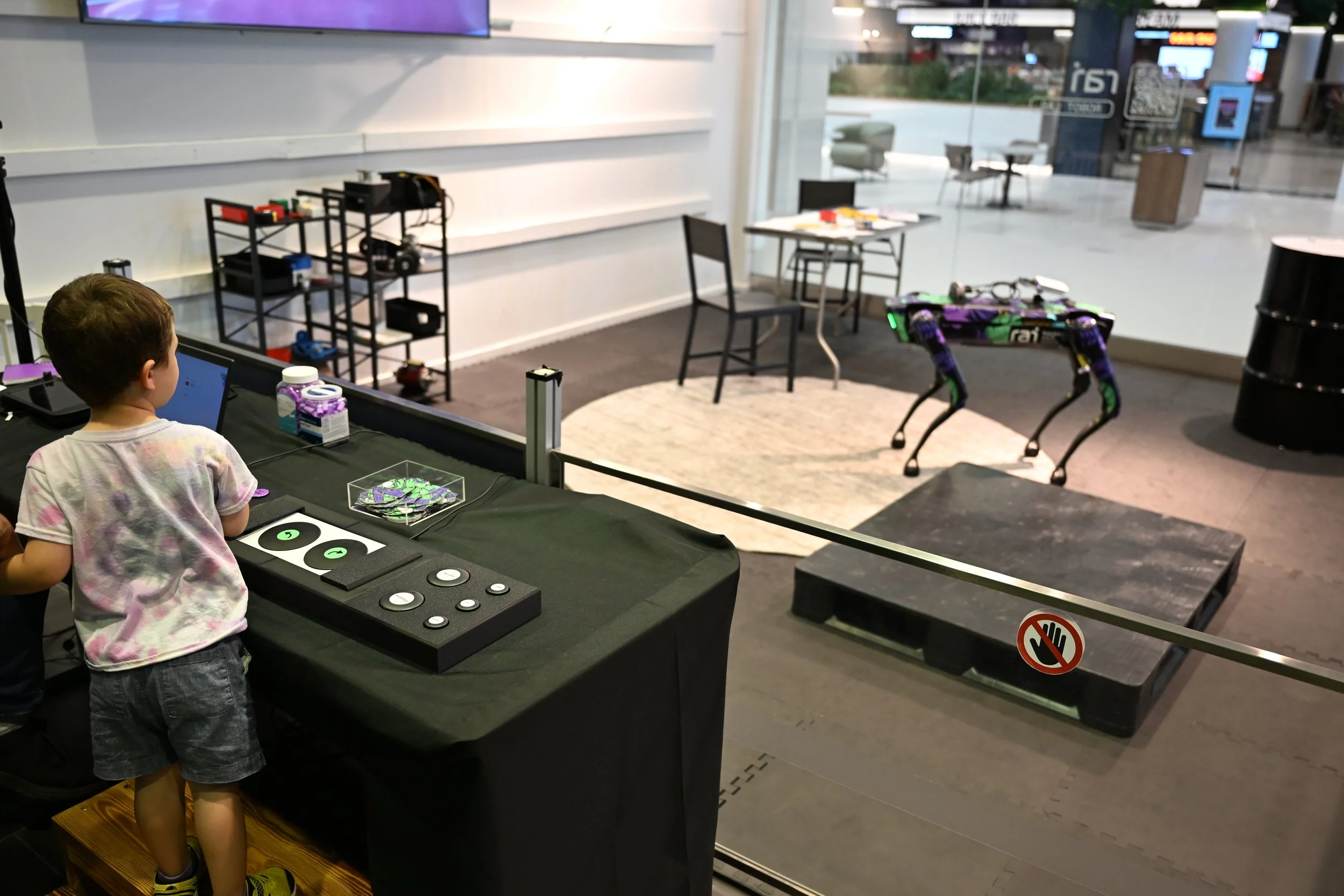
Researchers at the Robotics and AI (RAI) Institute, the MIT Media Lab, and I conducted a large-scale research project with members of the public at the RAI Institute Robot Lab. The study measured participants’ (N = 753) perceptions of Spot (a quadruped robot) before and after brief teleoperation driving interactions. We found that hands-on control significantly improved participants’ perceptions of Spot and broadened where people see robots’ roles in their lives [HRI ‘26].
A current HRI project investigates people’s perceptions of how different robot forms can contribute to achieving environmental sustainability.

Human-Machine Interactions for Sustainable Agriculture
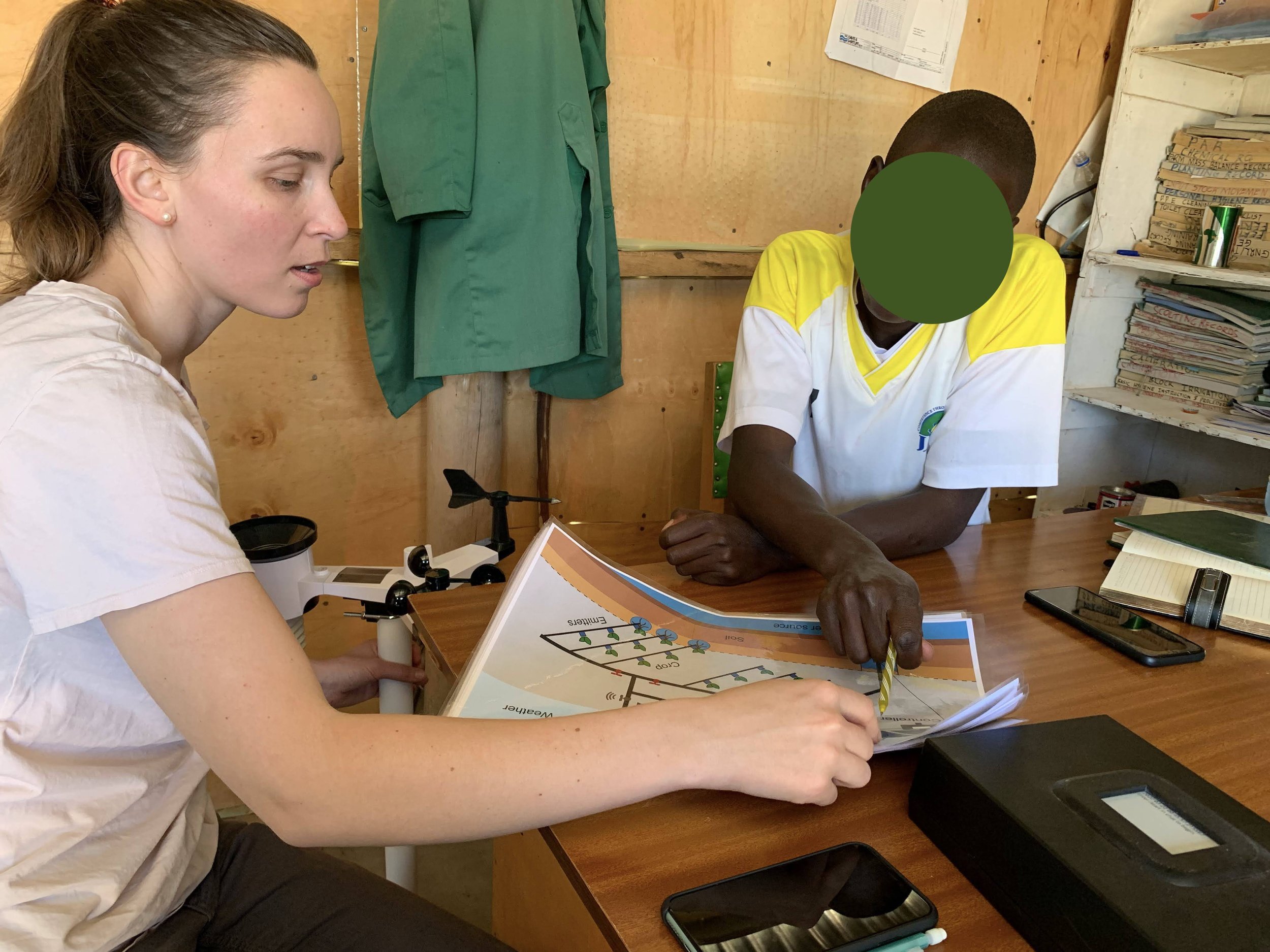
For my Ph.D., I designed a low-cost, easy-to-use precision irrigation scheduling tool and its human-machine interaction (HMI). We demonstrated that this tool uses 29–44% less water than conventional irrigation methods. As part of an international research team, I brought this project through several design stages. First, we interviewed farmers and market stakeholders from Kenya, Ethiopia, and Zambia to build user personas, quantify irrigation needs, and elucidate value propositions [Water ‘23]. Then, we proposed a new, low-cost HMI for one person, which we evaluated with farmers and stakeholders in Kenya, Jordan, and Morocco to ensure a high likelihood of farmer adoption [Sustainability ‘24]. Finally, our team deployed functional systems on farms in Jordan and Morocco to evaluate the HMI [AgriEngineering ‘26] and an irrigation scheduling theory my colleagues developed [Smart Agricultural Technology ‘26]. These field validations found that participants responded correctly to 93% of irrigation events using the HMI tool, resulting in potential water savings of 29–44%.
At Olin College, I advised an undergraduate research student who investigated opportunities to improve sustainable agriculture in New England. By interviewing farmers and market stakeholders, he identified the need to design tools and methods to enable more farmers to adopt reduced-till, organic farming in the region.

Engineering Design Processes and Design Team Communication
Since 2016, I have been building a large set of digital trace data to identify the communication patterns of successful engineering design teams; the dataset currently includes 516,000 Slack messages sent by 71 teams. Analysis of this dataset has demonstrated that there exists a measurable level of team and individual engagement that we can monitor from digital trace data.
For example, we have shown a significant correlation between teams’ communication patterns (e.g., their messaging quantity, frequency, and equality) and the strength of their design processes [ASME IDETC ‘18]. We have also investigated how design teams talk about “users”—the people for whom they are designing new products. Statistical analysis showed that stronger design teams mention users more consistently. Short-text topic modeling revealed that “user” as a topic correlated closely with process-related topics in the word vector space of stronger teams, compared to task-related topics in weaker teams [ASME IDETC ‘25].
Collaborators at the University of Toronto and the University of Waterloo have also used this dataset to investigate design team processes. This work has investigated the network maps of teams and centrality of their leaders [ASME IDETC ‘20], the types of topics discussed and when those topics are discussed within design cycles [Design Science ‘22], teams’ psychological safety [CHI Late Breaking ‘24], team alignment [GI ‘26], design disputes, and teams’ shared understandings.

Engineering and Design Education
I led a team at Olin College (four undergraduates and two staff members) to investigate the skills and mindsets alumni use in their post-baccalaureate careers and determine how these items were developed while at Olin [ASEE ‘26]. First, we interviewed alumni and other constituents to build a consolidated list of 45 items that alumni found important. Then, these items were included in a survey sent to four alumni classes. We found a positive correlation (r = 0.55) between how frequently alumni claim to use each of the 45 items and how much they developed them at Olin, suggesting that the school’s program prepared graduates well for their careers. Detailed analysis of individual items has elucidated Olin’s areas of strength and opportunities for improvement. The methods used and results have implications for other programs that seek to produce sociotechnical and/or career-ready engineering graduates.
Other projects in the engineering and design education space have included: designing and assessing Guided Discovery activities to build students’ intuition about linkage mechanisms, documenting and evaluating a sustainability practice and ethos in a first-year engineering design experience [IEEE FIE ‘24], and understanding how a community of practice can help faculty pivot to new research areas [ASEE ‘25].

